Family dinner has a lot of quiet heroes — whoever remembered to thaw the chicken, the kid who actually ate the broccoli, the timer that somehow didn't go off during the gravy. But nobody raises a glass to the appliance that shows up right as everyone else leaves the kitchen and absorbs the entire aftermath without complaint. At John Plyler Home Center, we think it's time the dishwasher got its due, starting with everything it's actually doing back there once the plates are empty.
The Small Stuff Finally Has a Shelf of Its Own
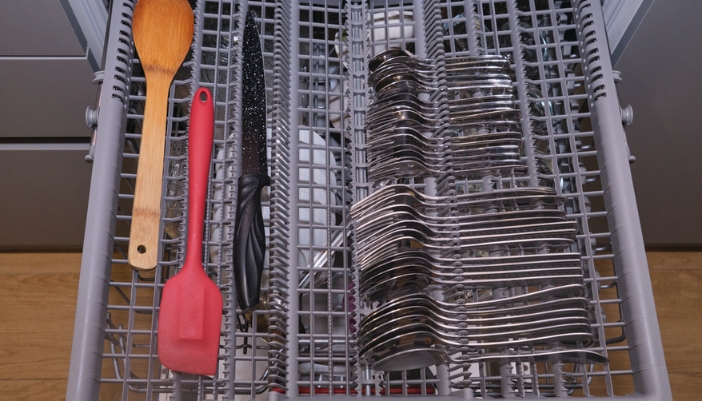
A slim rack above the top shelf claims the small stuff before it can clutter everything else. Spatulas, whisks, tongs, and the lid that never fits anywhere else all get their own dedicated real estate, instead of getting wedged sideways between wine glasses where they block water from reaching half the load. Anyone who's tried to cram a handful of forks into a normal top rack knows how much space silverware quietly eats up. Moving all of that up and out means the rest of the dishes get room to actually get clean, rather than nesting three deep and coming out with water spots baked onto the bottom of a bowl.
Pro Tip:
Lay wide utensils flat instead of propping them upright — angled slots trap water and leave streaks on flatware that's headed straight back into a drawer.
Cookware That Never Fit Anywhere Else Finds Room
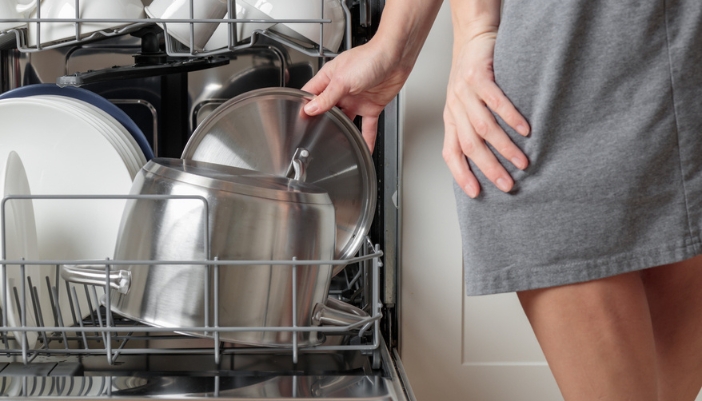
Fold-down tines and racks that shift or flatten mean oddly shaped cookware stops being an automatic hand-wash. A stockpot, a cast-iron skillet, or a sheet pan that's just a bit too long used to guarantee at least one item sitting in the sink overnight. Now the bottom rack can reconfigure itself around whatever actually got used, whether that's a tall lasagna dish or a cutting board that refuses to lie flat anywhere else. Adjustable tines also stop tall glasses and mugs from tipping mid-cycle, which solves the equally annoying problem of pulling out a "clean" cup still holding a puddle.
The Wash Cycle Can Tell How Bad the Damage Really Is
A soil sensor checks how cloudy the water gets early in the cycle and adjusts the wash from there, rather than treating every load the same. A pan crusted with last night's casserole gets a very different amount of water, time, and energy than a rack of mostly-rinsed cereal bowls — and most households run some mix of both, not one uniform load every night. Letting the machine judge how dirty things actually are means fewer re-runs for glasses that came out hazy, and less wasted water on nights when the "load" was really just a few cups and a cutting board.
Running a Load Stops Being Something You Plan Around
Quieter motors and better-insulated tubs mean a cycle can run during dinner cleanup, through bedtime, or straight through the night without becoming background noise for homework, phone calls, or a light sleeper down the hall. Delayed start takes it a step further: load it right after dinner, set it to start once everyone's actually asleep, and wake up to a clean, dry rack instead of a sink still full of soaking pans. It's less a feature and more a small negotiation the dishwasher wins on your family's behalf every single night.

The Only Dinner Guest That Cleans Up After Itself
Dinner gets the applause, but the dishwasher works the closing shift — sorting odd shapes, reading the mess, and running quietly enough that nobody has to think about it twice. If yours is still guessing instead of sensing, or leaving half the load for your hands, stop by with your questions, or shop our dishwashers, and the team at John Plyler Home Center will help you find one that finally earns its seat at the table.